
[starbox]
We usually think about the medical systems of indigenous people in terms of plants, rituals, or shamanic chanting. But one very important health strategy that indigenous people have used for centuries is “voluntary isolation,” a radical form of what we now call social distancing: cutting off all contact with other human groups in order to escape from fatal epidemics and colonial violence. The so-called “uncontacted” tribes of the Amazon are not people who were accidentally left behind in the Stone Age; rather, they consciously chose to isolate themselves from their neighbors in order to survive. Today, the entire world is getting a small taste of the kind of mortal panic that has led indigenous peoples to cut off all contact with outsiders; in some cases, through the present day.
The indigenous Tuyuka priest Justino Sarmento Resende from the upper Rio Negro in Brazil has written about how the coronavirus pandemic reminded him of his childhood:
Whenever my father heard that a dangerous disease was coming, he took us to an even more isolated place. There, we waited until the latest news finally reached us: “the disease has passed.” We had no doctors or nurses to take care of us. But we were watched over constantly by our sage grandparents who performed protective ceremonies using white pitch incense to fumigate the environment, the people, and their pets.
Indigenous people often understand illness as resulting from breaking certain taboos, especially around hunting. When hunters show disrespect to animals by desecrating their watering holes, killing too many animals, or wasting meat, the game animals and their spirit allies take “revenge” on humans, causing illness. Again, we see the relevance of indigenous ecological wisdom in these times, since coronavirus seems to have originated in wild animal markets in Asia: a kind of “revenge” by bats and pangolins on humans for over-hunting.
And finally, indigenous people do not usually share Western optimism: this belief in infinite progress and a faith that technology will solve any problems that appear. Indigenous peoples have watched their societies collapse or be decimated by contagious diseases, social disintegration, and language loss. Indigenous myths often reflect a cyclical cosmology in which prior creations are destroyed and replaced. The current environmental and epidemiological apocalypse must feel quite familiar to many indigenous people. The Ends of the World is a book by Deborah Danowski and Eduardo Viveiros de Castro that delves into the relevance of indigenous concepts in these apocalyptic times.
Hopefully, we can all learn something from this fatalism, and understand that, as Brazilian indigenous philosopher Ayrton Krenak has recently warned, we cannot simply go back to life as usual once this wave of the epidemic passes. If humanity doesn’t make fundamental changes in its relationship with the environment and the other species of the planet, human society could truly be doomed to extinction.
I hope that we all come through our coronavirus quarantine safely, and with a heightened appreciation of our interconnections and shared fragility.
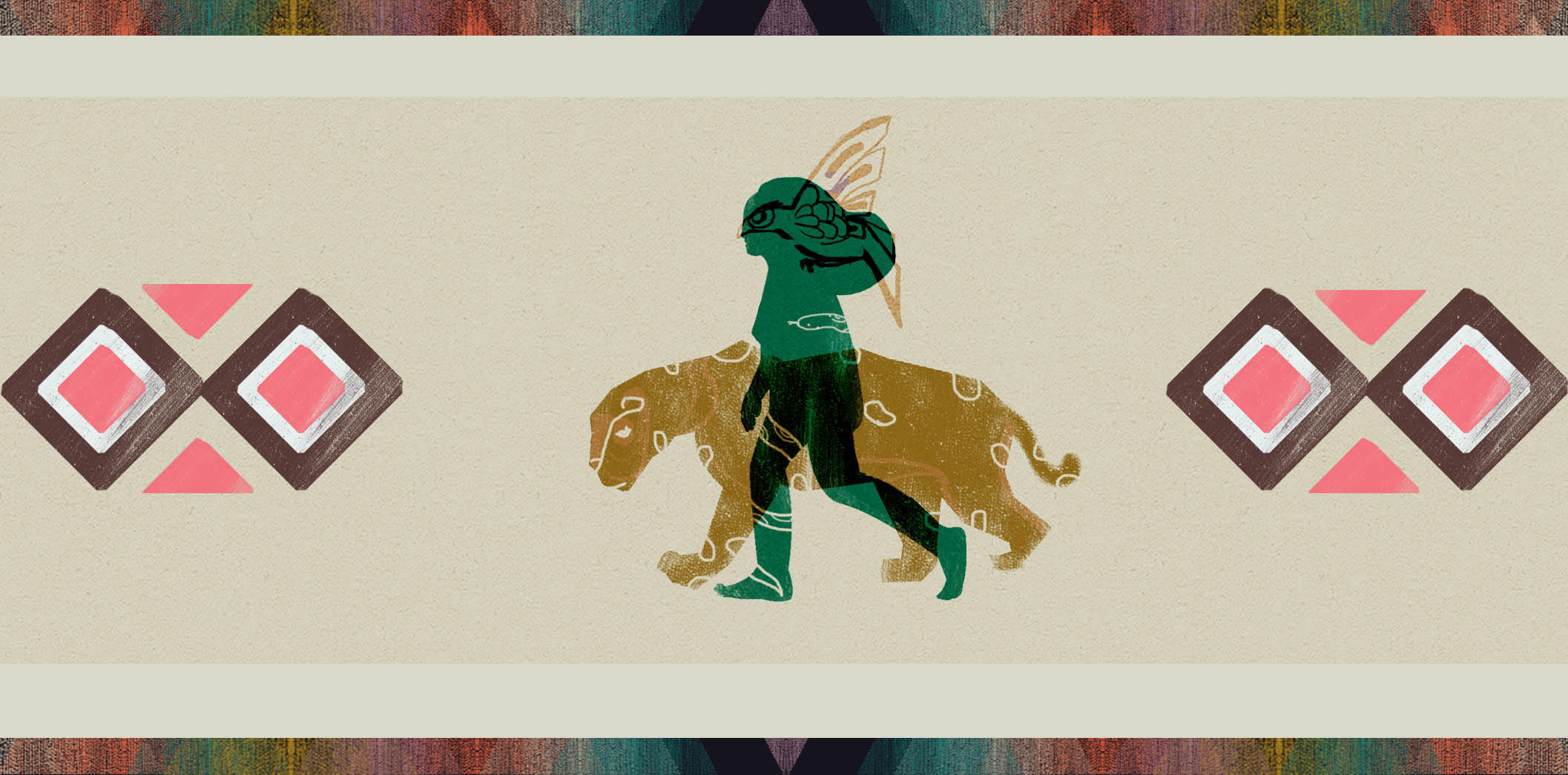
Art by Karina Alvarez.

